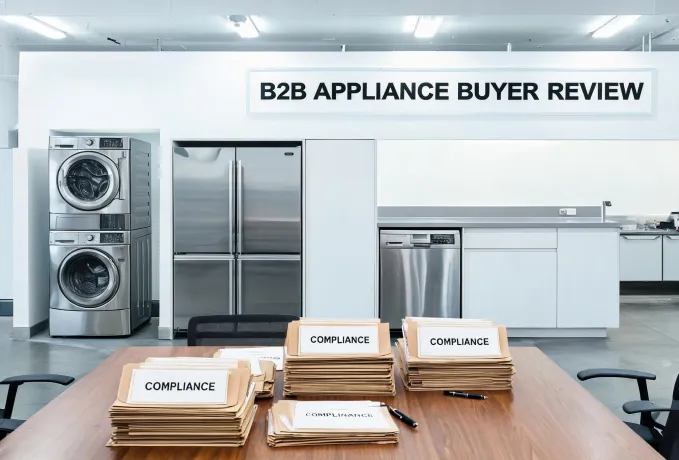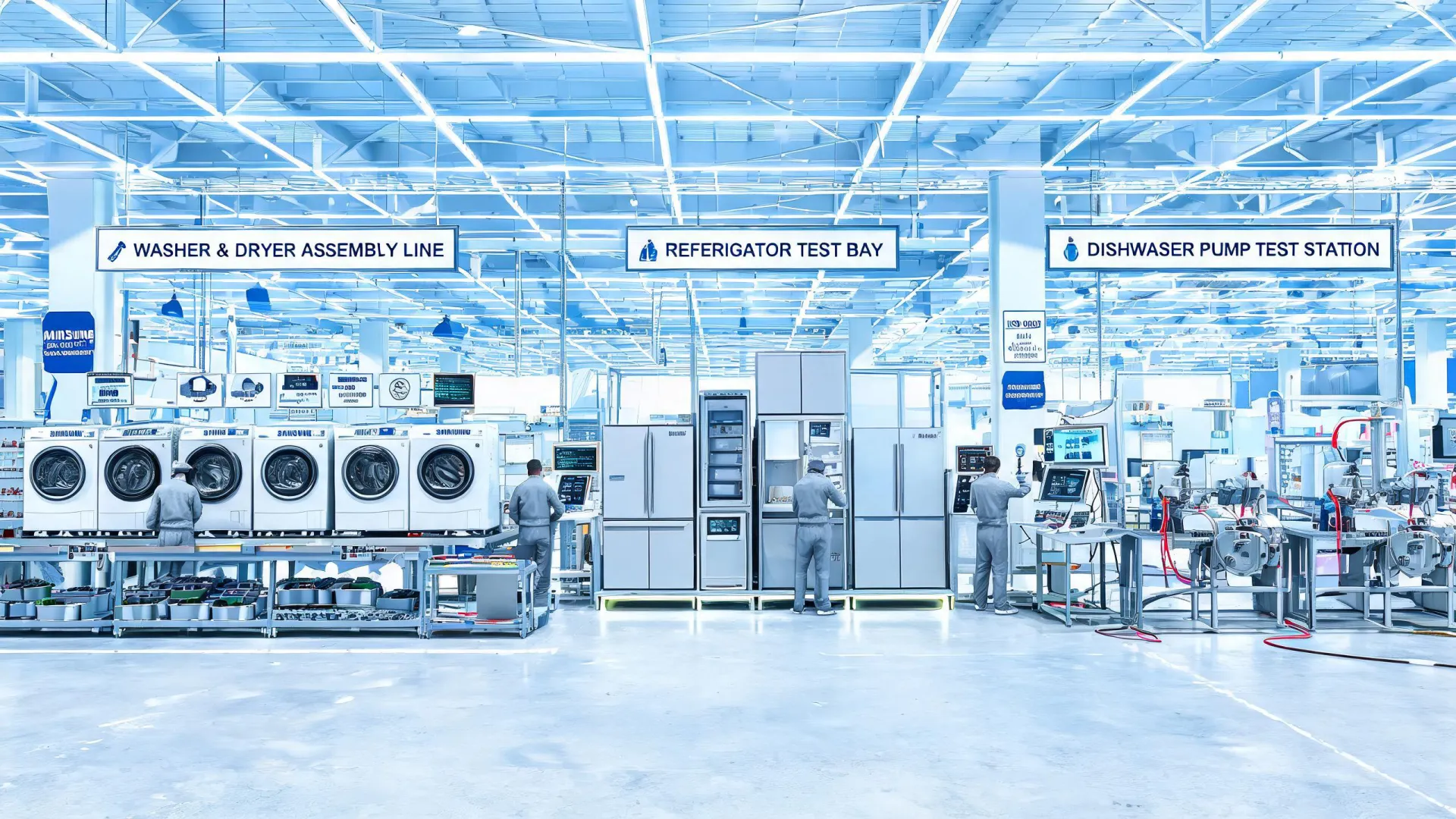
"Reliable appliance programs are not won by one impressive sample. They are won by repeatable engineering, clear documents, and patient coordination between sourcing, quality, retail, and service teams."
That belief shapes how Samsung handles B2B appliance conversations. A buyer may arrive with a refrigerator reference, a washer specification, a dishwasher target price, or a smart-appliance concept, but the real work is usually broader. The program must support factory feasibility, retail packaging, quality expectations, spare parts, market paperwork, and a launch calendar that several departments can accept.
Turns category goals into practical RFQ scopes and sample priorities.
Coordinates declarations, test requests, label notes, and technical file updates.
Aligns carton markings, language packs, inserts, and retail-ready dielines.
Connects buyer inspection points with production and after-sales file planning.
Many buyers begin with a single refrigerator, washer, or dishwasher inquiry. Samsung helps convert that inquiry into a repeatable category plan that covers model families, market rules, packaging, accessories, order cadence, and after-sales material. This approach is especially useful for distributors and retailers that must brief several internal teams before the first purchase order is approved.
Our teams avoid vague environmental promises. Energy, refrigerant, standby power, water-use, and material statements are tied back to available product files, market-specific requirements, and buyer documentation needs. Where a claim requires testing, the claim stays in review until the buyer has supporting evidence for its target market. This discipline protects both the sourcing team and the downstream retailer because appliance claims often appear on packaging, product pages, manuals, and sales training materials long after the first sample has been approved.